

You might have heard someone talk about a “Good Samaritan” or say how they should “go the extra mile.” These common English expressions, and many more, come straight from the Bible. Aside from providing the answer for our existence, what happens after death and the cure for sin, the Bible has influenced the English language. Originally written in Hebrew, Aramaic and Greek, the Bible was first translated into English in the 14th century by Englishman John Wycliffe and his followers and has shaped idiomatic English ever since. Here are some Bible-derived expressions that are still very common in modern English, and how their meanings have shifted or stayed similar.
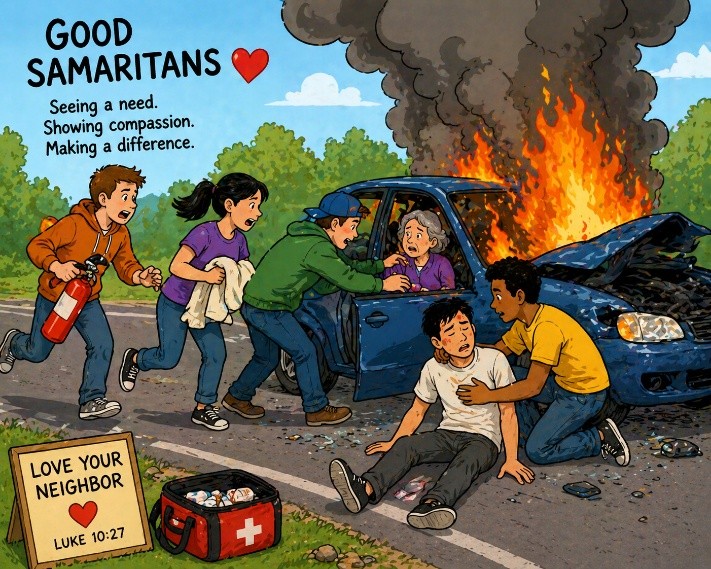
Good Samaritan Original: Luke 10:25–37 Jesus tells a story to explain that a “neighbor” is anyone in need and is to be shown mercy, regardless of background. In the story a wounded man is ignored by Jewish religious figures but helped by a despised Samaritan.
Modern meaning: A compassionate person who unselfishly helps others, especially strangers.
Some Good Samaritans helped rescue the people from the burning car
Go the extra mile Original: Matthew 5:41 Jesus was teaching about living differently from the norm and said, “whoever compels you to go a mile, go with him two.”
Modern meaning: Do more than what’s required; exceed expectations.
She cleaned her room just as her mother asked and then went the extra mile and cleaned the kitchen, too

Scapegoat Original: Leviticus 16:10 This was a goat that symbolically carried away the sins of the Jewish people. Jesus is now the scapegoat for all people because he bore our sins when he died on the cross.
Modern meaning: Someone unfairly blamed for others’ mistakes.
Jimmy was often the scapegoat in the family because he was mischievous.
The writing on the wall Original: Daniel 5:5–31 During a royal feast, mysterious writing appears on a wall. Daniel interprets it as God’s judgment: King Belshazzar’s kingdom will fall—and that very night, it does.
Modern meaning: A clear sign that something bad will happen soon.
Her bitterness and complaining were the writing on the wall that she was going to have relationship issues.
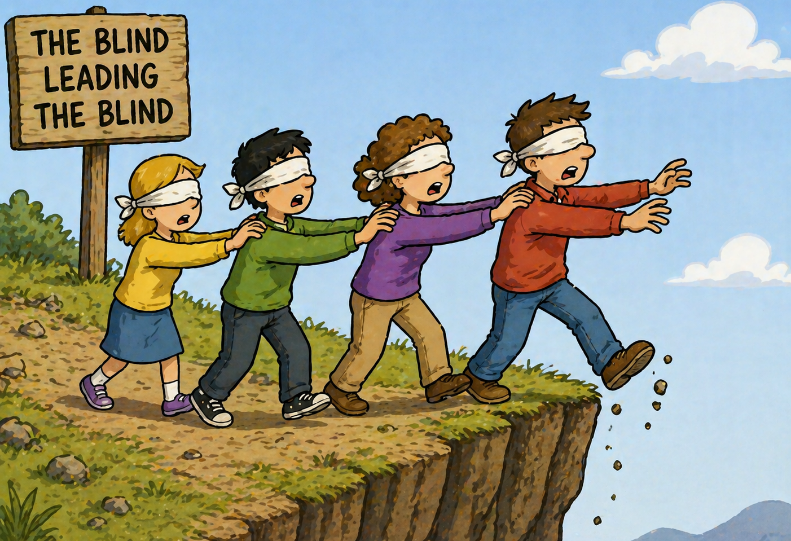
The blind leading the blind
Original: Matthew 15:14 Jesus was talking about the Jewish religious leaders and said, “If the blind lead the blind, both shall fall into the ditch.”
Modern meaning: A situation where an unqualified, ignorant, or inexperienced person attempts to guide or teach others who are equally uninformed.
Getting advice from him about money is like the blind leading the blind. He’s in serious debt. While we use language every day, we often do not realize where most of it comes from. The Bible, with its profound truth, has not only impacted the English language, but countless individuals who have personally encountered and been transformed by the God of Love who inspired every word.