
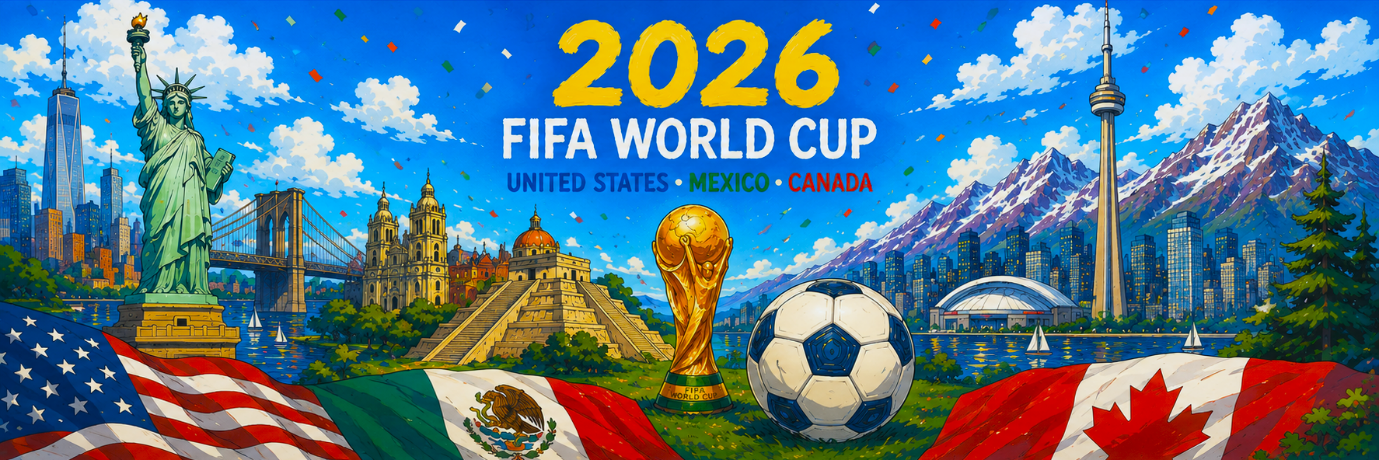
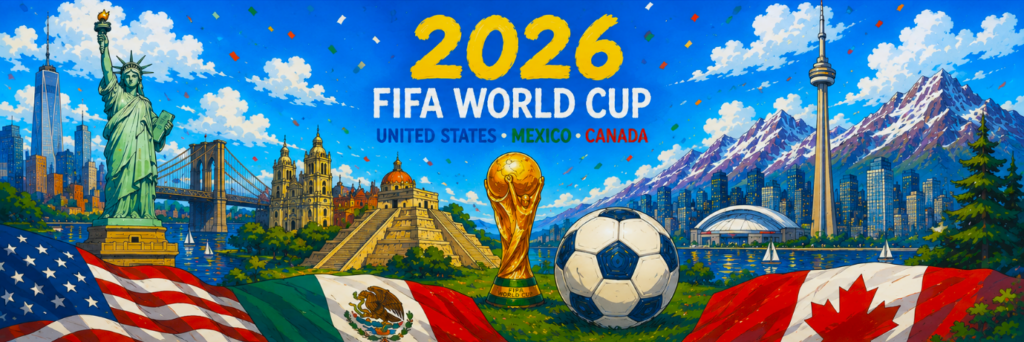
The 2026 FIFA World Cup will be the biggest World Cup ever held. For the first time, the tournament is being hosted by three countries: The United States, Mexico, and Canada. The competition will run from June 11 to July 19, 2026, and matches will be played in 16 cities across North America.
This World Cup will feature a record 48 teams, an increase from the previous 32-team format. The teams will be divided into 12 groups of four. The top two teams from each group, along with the eight best third-place teams, will advance to a new Round of 32 before the knockout stages continue. A total of 104 matches will be played.
Fans can look forward to seeing many of the world’s best players and national teams compete for soccer’s most prestigious trophy. Defending champions Argentina will try to retain their title, but as with every World Cup, there will be upsets. The tournament promises exciting matches, large crowds, and a celebration of soccer on a scale never seen before.
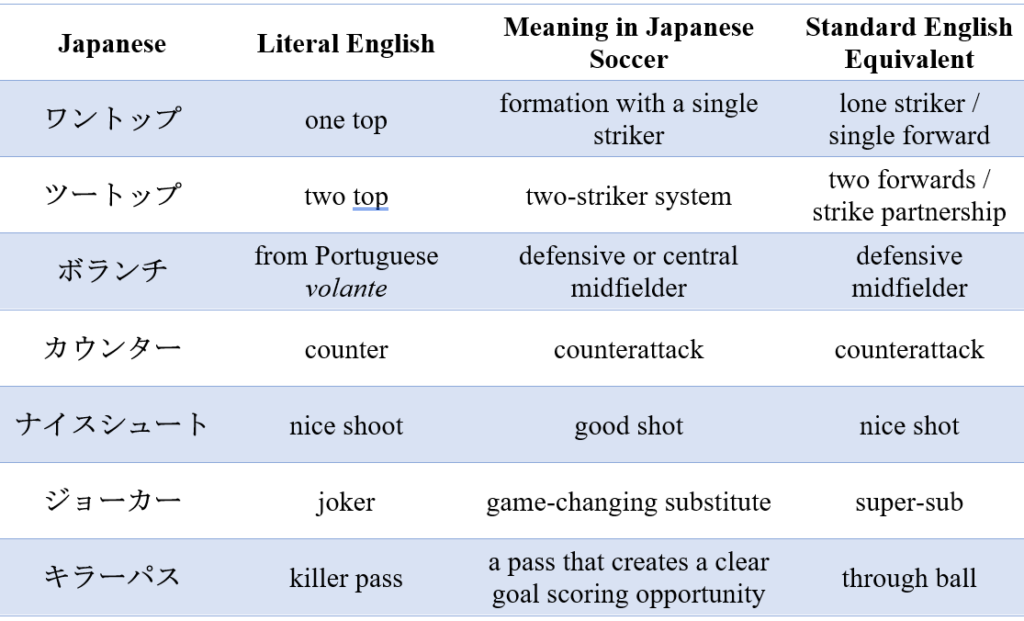
With the World Cup upon us and soccer front and center, now is a good time to look at the wasei-eigo (和製英語) connected with soccer. These Japanese-made expressions are coined from English words but do not exist in standard English, or have completely different meanings. Confusion can arise if they are used when speaking English, so let’s look at some of them. Erik