


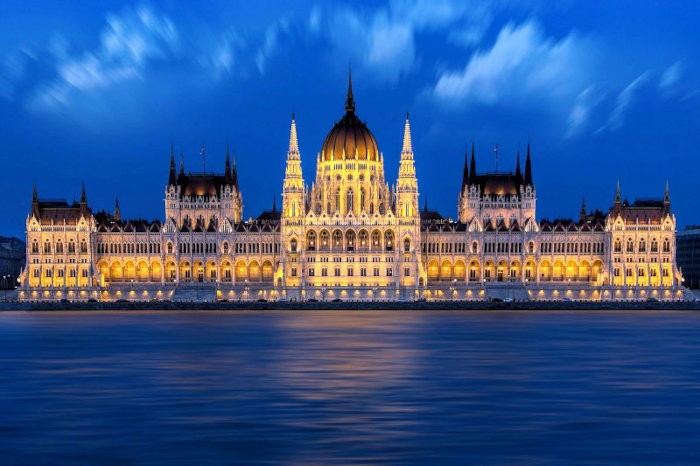
 The Hungarian Parliament building, short the Parliament aka Országháza, is rightly ranked among the most beautiful parliamentary buildings in the world. It is the most iconic building of Budapest, a World Heritage Site since 2011, a priceless historical asset and the pride of the Hungarian nation.
The Parliament is the home of the legislature, the place where the 1000-year-old Holy Crown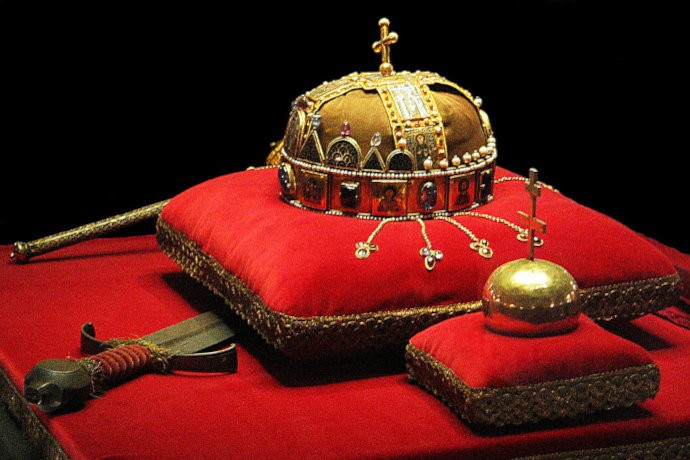 is kept, and the workplace of 199 members of parliament and the 741 people who help them.
Construction of the Parliament
The imposing structure, built at the end of the 19th century – over 17 years (1885–1902) – has now become a symbol of Hungary and the capital. The time of construction was one of the most dynamically developing periods of the country’s economy. At that time, Heroes’ Square, Andrássy Avenue, the Western Railway Station, several Danube bridges were built, and the continent’s first underground railway (subway), which is still in operation in its original form, was also inaugurated at this time.
 It was expressly intended that the building would be made from Hungarian raw materials, with the involvement of domestic industrialists and manufacturers, and that its decoration would try to reflect the flora of the Carpathian Basin. No expense was spared during the works, about 40 kg of gold was used to decorate the House, in today’s price it is worth about US $7,000,000, just for the gold decoration itself. The total building cost, in today’s dollars, was about US $350,000,000.
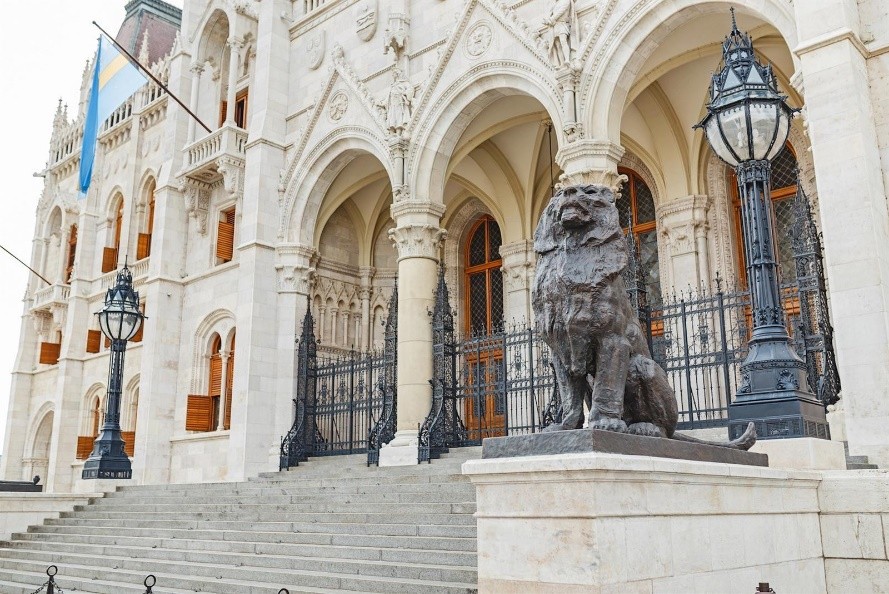 The building’s exterior appearance and style
The dimensions of the House command respect: its greatest width is 123 meters, the length of the wings parallel to the Danube is 271 meters. With its dome tower, it soars 96 meters into the sky. The dome’s height symbolizes the year of the Hungarian Conquest of the Carpathian Basin (in 896) and the nation’s founding a millennium (1000 years) ago (the building was inaugurated in 1896 although it wasn’t fully completed until 1902). The number 96 is also reflected in the number of the main stairs’ steps: 96 steps lead up to the dome hall.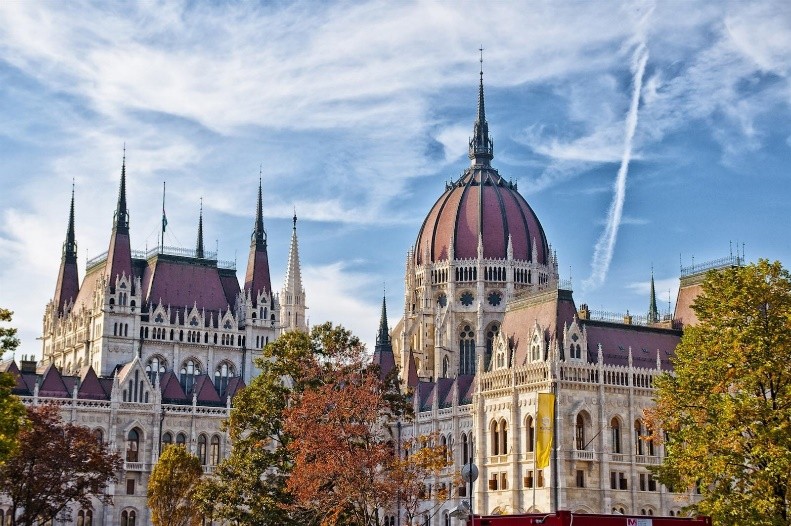 The Parliament House mixes elements and motifs from various architectural styles: its floor plan is Baroque, the decoration of the facade evokes the world of Gothic, and the decoration of the ceiling bears Renaissance features.
Symbolic meanings of the architectural solutions 
The design of the Parliament House building is the result of conscious symbolic choices, carrying important historical and political messages. Surrounded by towers on both sides of the dome, the session hall of the House of Representatives and the House of Lords rises, which evokes the memory of the Parliament operating in a bicameral system at the time of construction. The two session halls are completely identical in size and design, thus referring to the equality of the lower house of people’s representation and the historical upper house. Between them rises the dome, which represents the unity of the legislature and also served as the venue for the joint ceremonial sessions of the two houses.
In Numbers
 The building is divided into four floors, with a floor area of nearly 18,000 square meters. Its volume is 473,000 cubic meters, which could accommodate 50 five-story residential buildings. Approximately 40 million bricks were used for its construction, and 30,000 cubic meters of carved ornamental stone were used for its cladding. The facade is decorated with 90 stone statues depicting great figures in Hungarian history, and there are another 152 statues in the House. The Parliament can be entered through 29 entrances. Its floor plan is symmetrical, its main spaces form a cross, and the dome rises at their intersection. Inside the building there are 10 internal light courtyards, 14 elevators, and several hundred offices. The rooms are connected by a seemingly endless corridor system. The red carpet running through the House is nearly 3 kilometers long.
Old exterior, modern technology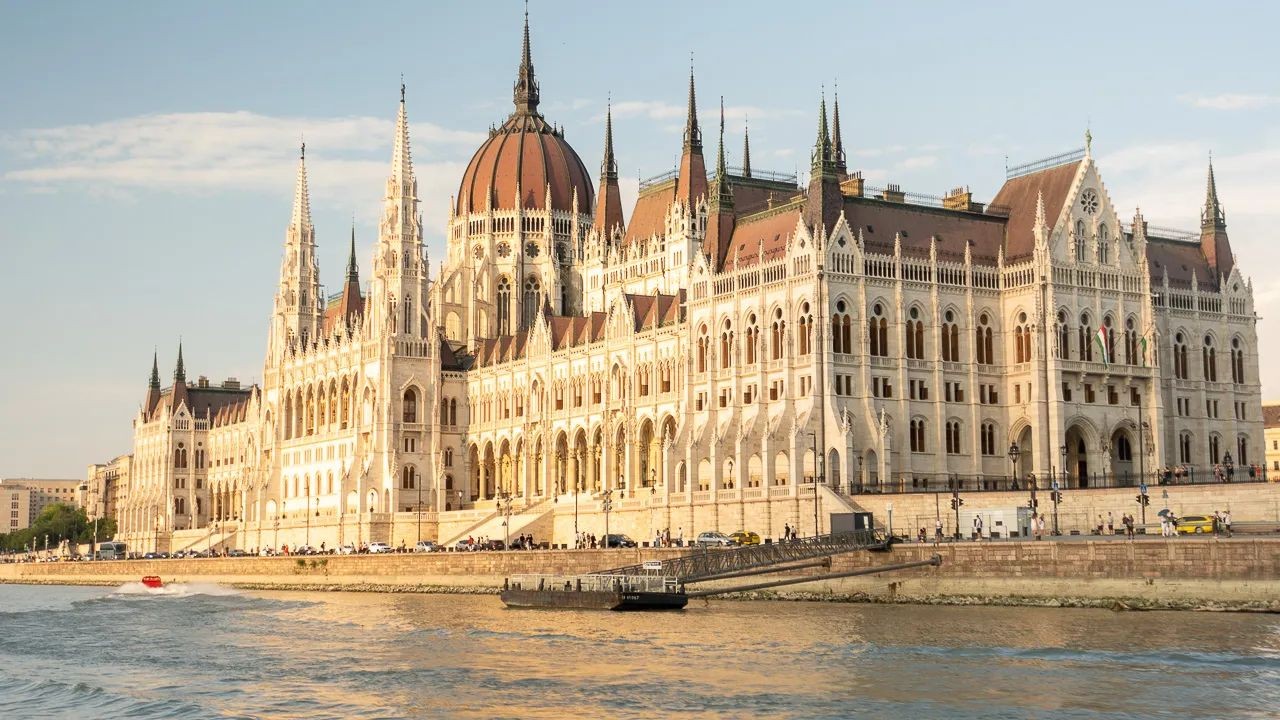
The home of the legislature was equipped with the most modern technical innovations. The roof structure of the building is made of steel, with the most modern technology of its time. The central heating and cooling system of the House – which was considered one of the most modern in Europe at the time – is still functioning perfectly after some renovation. The building also had gas and electric lighting in parallel. Many rooms had a centrally controlled clock with a single clockwork. The House also had a modern fire alarm and a telephone system with 24 extensions.
Sadly, the building’s architect, Imre Steindl, had passed away a few weeks before the completion in 1902.
Annually about 700,000 people visit the building so if you plan to join them you better plan ahead, tickets are sold out quickly. As of this writing, March 3, the first available time slot is around mid-April! And it is costly, for foreign visitors from outside the EU, it is about 7,000 yen for a 45 min tour with audio guide in about 20 languages, including Japanese. Alex
