


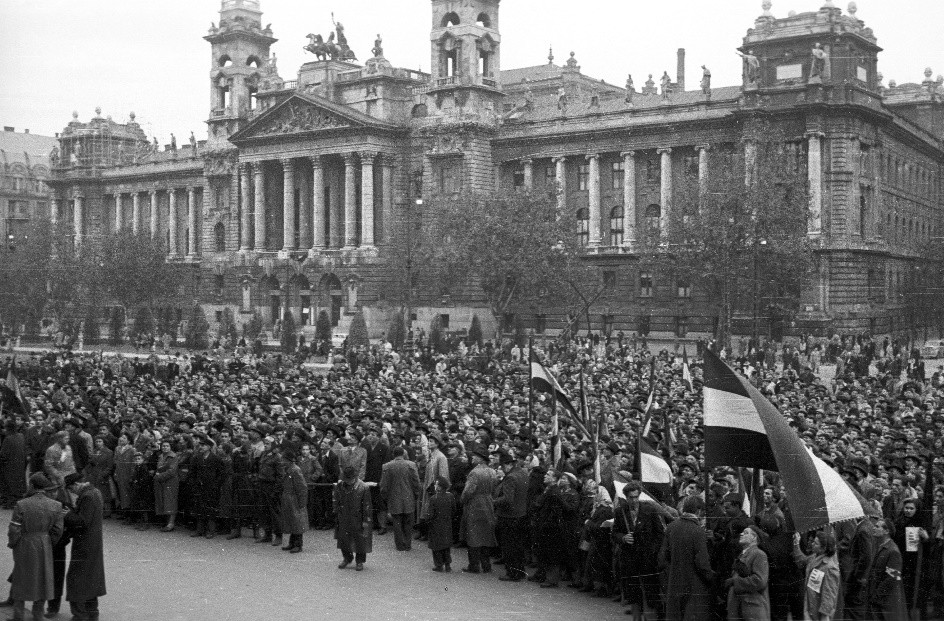
 In the autumn of 1956, the streets of Budapest erupted in a blaze of defiance against the government, Hungarian People’s Republic, a Soviet puppet state established in 1949, four years after the end of the WWII.
For years, Hungarians had chafed under the iron yoke of communist rule, imposed by Moscow’s subordination. Stalinist purges, forced collectivization, and economic ruin had stripped the nation of its sovereignty.
The government, led by Mátyás Rákosi and later Ernő Gerő, slavishly followed Kremlin dictates, suppressing dissent and enforcing Russification. The Hungarian people wanted to break free from this suffocating Soviet and communist domination.
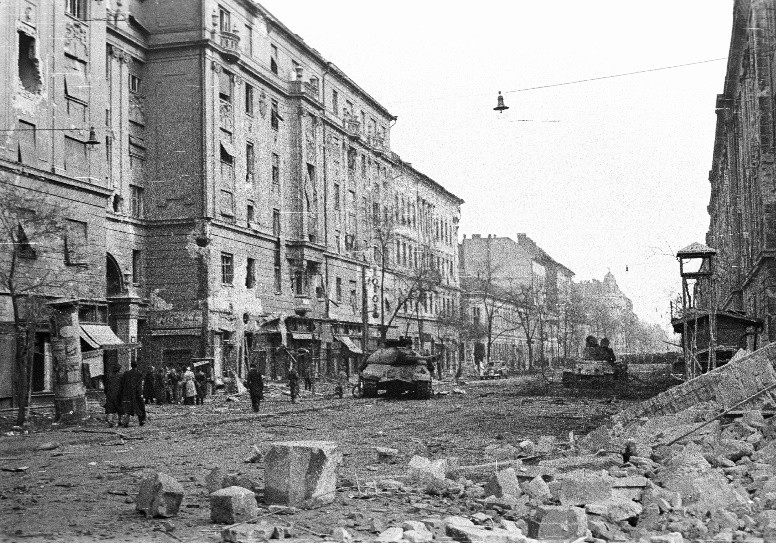
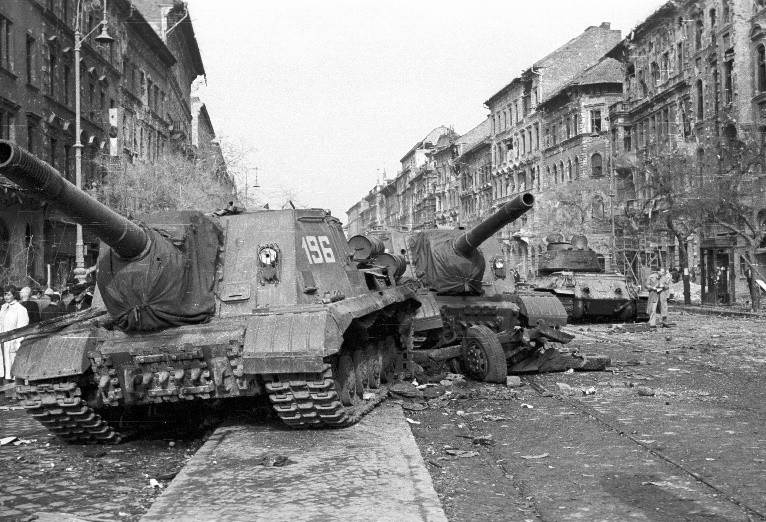 On October 23 1956, sparked by student protests demanding democratic reforms and national independence, the revolution exploded. Workers, students, and soldiers toppled Stalin’s statue and seized key buildings. For two grueling weeks, ragtag freedom fighters—armed with Molotov cocktails and captured weapons—battled the overwhelming might of the Red Army. Soviet tanks rolled in on October 24, but initial retreats gave hope. The insurgents fought valiantly, briefly toppling the regime and installing Imre Nagy as prime minister, who promised free elections and withdrawal from the Warsaw Pact.
The world watched in silence. Thousands died in the fighting—estimates range from 2,500 to 3,000 Hungarians killed. As borders briefly opened over 200,000 fled to Austria and beyond, seeking refuge in the West. When Soviet forces finally crushed the uprising on November 4 with 80,000 troops and 500 tanks, the borders slammed shut, the Iron Curtain, (a double barbed-wire fence with land mines between the two fences) rebuilt stronger than ever preventing anyone from leaving the “Workers’ Paradise”.
No aid came from the West, despite endless encouragement. Radio Free Europe, funded by the CIA, broadcast propaganda hinting at imminent liberation—”Help is on the way!”—stirring hopes that never materialized. While the West was under no obligation to help, this irresponsible incitement fueled the fight and led to needless slaughter. In a newspaper interview in 1957, Khrushchev commented, “support by United States … is rather in the nature of the support that the rope gives to a hanged man”. The revolution was brutally quashed: thousands of freedom fighters imprisoned in gulags, hundreds executed, including Imre Nagy in 1958.
 The message? Never trust the West, they lie even when they breathe. In case you disagree with my sentiment ask the Poles and Czechs about their experience with the British during WWII.
A lesson Vladimir Zelensky, the Ukrainian president, should have headed before trusting that pathological liar Boris Johnson with his lies, I mean advice, in 2022. Help was promised to the Ukrainians if they continued fighting the Russians, look where Ukraine is now.
But the Hungarians, rebellious bunch they are, never gave up and 33 years later it was Hungary who first threw off their chains and started the process that first led to the end of communist rule in Eastern Europe and ended in the break-up of the Soviet Union. Serves them right. Alex