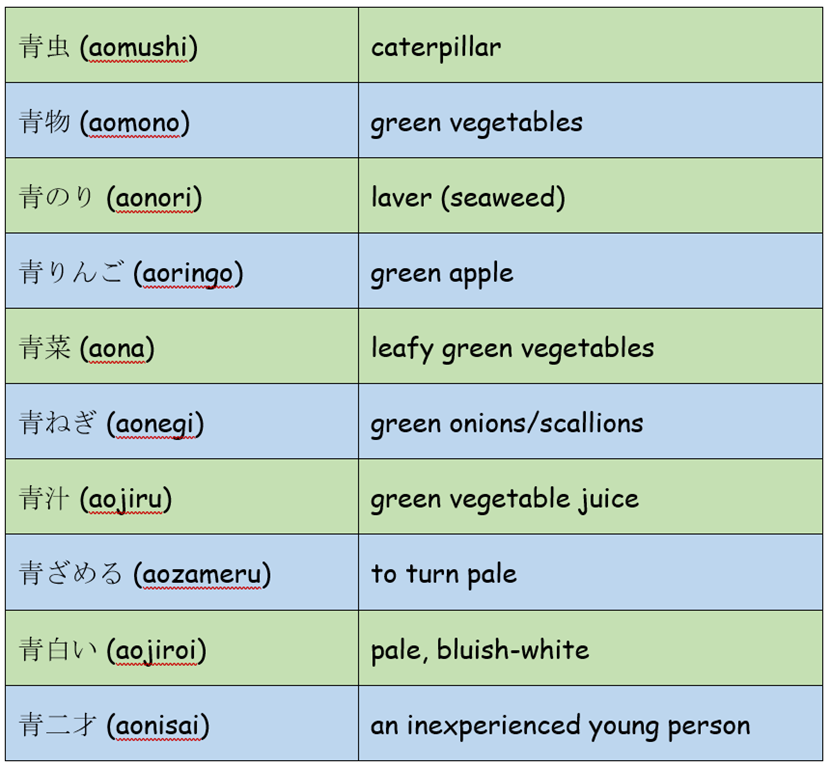

Languages have all sorts of quirks that learners of that language notice, but native speakers seldom give a second thought. One example for those who study Japanese is the use of the word ‘ao’ (青blue) for things that look green.
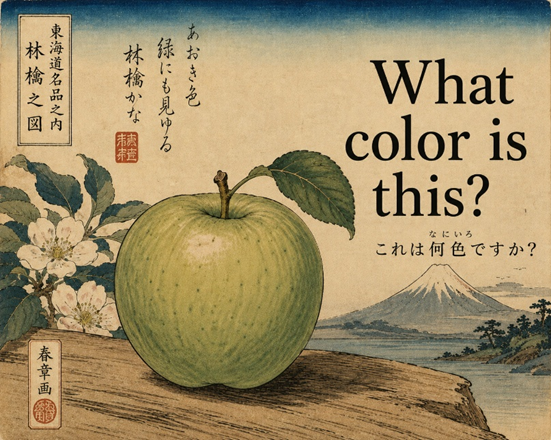
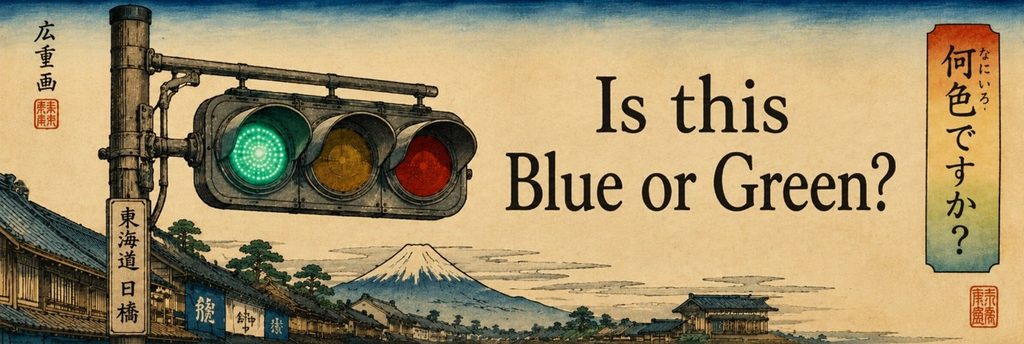
Why is a green traffic light called an ‘ao shingō’ (blue traffic light) when it is clearly green? While this does not seem to make sense, there is a historical reason for it. Long ago, Japanese had fewer color words than it does today. The word ‘ao’ was used for a wide range of colors, including what English speakers would call both blue and green. It described colors found in nature, such as young leaves, grass, and the sky. Because of this, many green objects were grouped together with blue ones. Over time, Japanese developed a separate word for green, ‘midori’. At first, ‘midori’ was not considered a completely independent color. Instead, it was seen as a shade of ‘ao’.
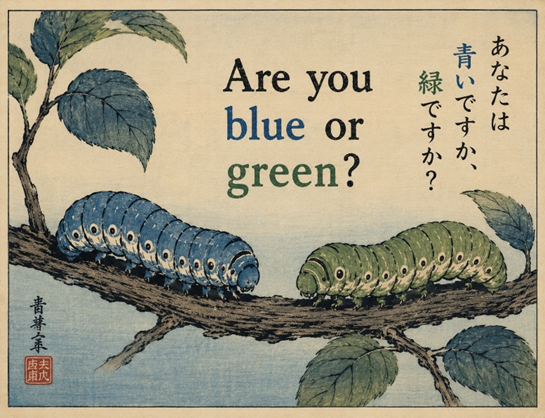
As Japanese society changed and people began to talk about colors more precisely, ‘midori’ became recognized as the standard word for green. Even so, as the saying goes, old habits are hard to break, ‘ao’ was not replaced with ‘midori’ in many cases. This is why ‘ao shingō’ is still used for a green traffic light. These ‘ao’ expressions have been passed down through the generations and remain a natural part of the language. Here are some more and the English equivalents.